Preschool for
3-Year-Olds
Our Pre-K 3 program provides a nurturing and structured environment where young children begin developing essential social, emotional, and early academic skills. Through play-based learning, hands-on activities, and guided exploration, preschool fosters curiosity, communication, and independence. It lays the foundation for future learning by promoting cognitive development, motor skills, and positive interactions with peers and teachers.
Preschool Three-Year-Old Curriculum
Literacy
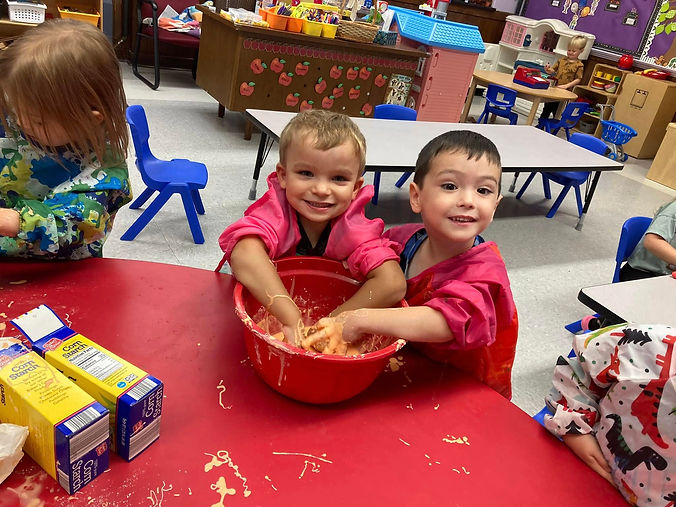
In preschool, we aim to develop a strong foundation in letter and sound recognition. Children build their skills through center-based activities and our Hegarty phonics program. Our open-classroom library encourages child-initiated exploration in books and daily read-alouds nurture growth in reading comprehension, active listening, and vocabulary. Students engage in pre-writing skill-building activities, such as contributing to class-made alphabet books and strengthening their fine motor skills development. Because movement of the smaller muscle groups in a child's hands, fingers, and wrists are integral to their ability to hold and use writing utensils effectively, activities and tools we use to promote fine motor skill development include beading, play-doh, clay, sand and water sensory tables, cutting, ripping, and pasting.
Schedule at a Glance
8:30 - 9 am · Child-Initiated Play
An opportunity for children to explore, create, and learn through play, guided by their interests.
9:10 - 9:20 am · Circle Time
Children gather to engage in discussions, songs, and interactive lessons to positive tone for the day.
9:20 - 9:40 am · Snack
A designated time for children to enjoy a nutritious snack, socialize with peers, and practice self-care skills like cleaning up and sharing. (Children bring their snack to school daily.)
9:45 - 10:15 am · Enrichment Classes
Specialized classes like music, gym, and library provide opportunities for children to explore creativity, develop physical coordination, and foster a love of learning.
10:20 - 11:10 am · Anchor Activity
The focal point of the day that ties together learning objectives and hands-on exploration.
11:20 - 11:25 am · Music and Movement
A music and movement break energizes children through activities like singing, dancing, and rhythmic clapping. It promotes self-expression, coordination, and active listening while providing a joyful way to refocus for the day.
11:30 am - Noon · Lunch
A time for children to enjoy a healthy meal, practice good manners, engage in conversations, and foster social skills. (Children bring their lunch to school daily.)
Noon - 12:20 pm · Child-Initiated Play
An opportunity for children to explore, create, and learn through play, guided by their interests.
12:20 - 1 pm · Recess
A lively break for outdoor play at the school’s playground, the park, or in the gymnasium. Children have the freedom to explore and socialize, supporting their social emotional development.
1 - 1:15 pm · Story Time
A calming activity where children listen to soothing stories, helping them unwind and transition into rest time. This peaceful moment promotes relaxation and before a quiet break.
1:15 - 2:15 pm · Rest Time
A quiet period for children to relax and recharge. This time supports emotional well-being and physical rest.
2:30 pm · Dismissal
At the end of the day, children are guided through a calm and organized dismissal process.
The schedule below provides a glimpse into a typical day in one of our PreK 3 classrooms. While the overall structure remains consistent, each teacher thoughtfully adapts the daily schedule to meet the unique needs and interests of their students.
As a result, specific activities and times may vary.
Flexible Program Options for 3-Year-Old Preschool
Five-Day,
Full Day Program
Monday - Friday
8:30 am - 2:30 pm
$5,381.25
ANNUAL TUITION
$538.13
MONTHLY PAYMENT
Five-Day,
Half Day Program
Monday - Friday
8:30 am - 11:30 am
$3,596.25
ANNUAL TUITION
$359.63
MONTHLY PAYMENT
Three-Day,
Full Day Program
Monday, Wednesday, Friday
8:30 am - 2:30 pm
$2,583
ANNUAL TUITION
$258.30
MONTHLY PAYMENT
Three-Day,
Half Day Program
Monday, Wednesday, Friday
8:30 am - 11:30 am
$1,291.50
ANNUAL TUITION
$129.15
MONTHLY PAYMENT